Editorial update — November 11, 2026: The original May 27 report treated a short "New Era, New Engine" teaser as proof that Rocket League would receive more realistic ball physics, guaranteed performance gains and a specific competitive makeover. Epic Games has since explained that the Unreal Engine 6-based Rocket League transition is being developed for 2027, with professional players helping test the feel of the rebuilt game. This article separates official statements from expectations and keeps its original May 27 publication date.
Is Rocket League moving to Unreal Engine 6?
Yes. Psyonix and Epic Games have confirmed work on the next generation of Rocket League using Unreal Engine 6 (UE6). The game's official website currently advertises the message "New Era. New Engine." Epic's Rocket League support page specifically acknowledges an upcoming Unreal Engine 6 update.
Epic Games France published a first-party development update on September 21, 2026. It says Psyonix hosted professional players at Epic's studios to test the next-generation game during development.
The official update describes the 2027 transition target, but it does not give an exact day, a public beta schedule or a complete list of console performance targets.
That is significantly more concrete than May's original trailer, while leaving important technical details open.
Why are professional players testing the rebuild?
Rocket League is unusually sensitive to car handling, ball movement, aerial control and precise collision timing. A small change to how these interactions feel can matter to experienced competitive players.
According to Epic's September statement, Psyonix has been inviting professionals to play early development versions and share feedback so that the physics and overall feel meet players' expectations when the game moves to UE6.
The crucial distinction is that the objective is to preserve and refine familiar gameplay, not a public promise to make the ball behave "more realistically" or to change every hitbox and aerial mechanic.
The tests are not independent GameLogNews benchmarks. They are early developer-supervised sessions, and a build demonstrated to professionals does not establish how the future consumer version will run on every supported device.
The studio's willingness to collect feedback does suggest competitive feel is a focus, but it would be inaccurate to convert that into claims of zero input latency or absolutely unchanged physics.
When will the Unreal Engine 6 version launch?
Epic's September 2026 media statement refers to moving Rocket League to Unreal Engine 6 in 2027. Other reporting from the Rocket League World Championship also described a 2027 target, not a firm day.
As of this November 11 editorial update, there is no officially published exact release date. Players should be cautious about articles promising a particular spring day or giving an unverified week for a public test.
The studio may release additional demonstrations, development footage or platform details before the transition. Any schedule change should be checked with Rocket League's official news.
This article does not promise that the whole migration is playable in 2026, nor that the existing game will stop working on a particular date.
What is Unreal Engine 6 actually changing?
In a June 22 development roadmap, Epic's engineering leadership explained that UE6 is the convergence of Unreal Engine 5 and the Unreal Editor for Fortnite (UEFN) into a unified framework.
The wider project involves new gameplay architecture centered on Verse and Scene Graph, improvements to development pipelines, and better ways for creators to build and operate large experiences. Epic also discussed interoperability between titles and ecosystems.
This technical roadmap is about the general game engine, not a list of promised Rocket League features. It does not mean Rocket League automatically inherits Fortnite game modes, Disney characters, user-created marketplaces or all of Epic's experimental networking systems.
Likewise, Epic's timeline for standalone UE6 Early Access tools should not be confused with the planned Rocket League migration window. Internal development may use tools long before a public game-engine SDK is broadly available.
The safest reader takeaway is that the game is being rebuilt on a future technology foundation, while the feature set must still be documented by Psyonix.
What is confirmed about graphics and performance?
Epic has publicly shown next-generation development work and an interest in updating the game. However, it has not provided a full, independently testable comparison of frame rates, resolution, input latency or rendering quality for the finished UE6 Rocket League.
Therefore the original claims of guaranteed "higher physics fidelity," "improved visual stability" or a universal upgrade for PS5 and Xbox Series X are not verified specifications.
Newer engine technology can enable better workflows and visual options, but it can also impose different performance requirements. Results depend on optimization, hardware, graphics settings and network conditions.
A game's successful technology migration is not something that can be inferred from an engine logo alone. Serious competitive players should wait for measured input and collision tests rather than trusting a trailer's suggestion of better realism.
Will competitive Rocket League feel different?
This is one of the central open questions. Psyonix's pro testing is intended to ensure the familiar feel survives the transition, but the public statement does not guarantee perfect preservation of every collision at the code level.
Tournament players care about stability and consistency. Developers therefore have good reason to test how aerial movement, boost management and ball trajectories behave across multiple scenarios.
GameLogNews has not observed internal playtest logs, tested an UE6 build or measured the future netcode. It would be irresponsible to promise changes to bounce angles, new car hitboxes or faster server response times based on the May teaser.
Psyonix may publish additional developer commentary when it is ready to disclose specific mechanical changes. For now, professional involvement is confirmed; concrete before/after results are not.
Is this connected to Fortnite?
Epic's general Unreal Engine 6 strategy includes unifying UE5 and UEFN technology, which makes Fortnite relevant as a development-platform reference. That is not the same as confirming a merger of Rocket League with Fortnite's game client.
The two games share an owner and have collaborated on some crossover content, but the cited Rocket League updates do not announce that Rocket League matches will be playable inside Fortnite, or that a separate launcher will be discontinued.
Some contemporary commentary inferred a future integration from the shared technology. Those predictions should be treated as speculation until Epic or Psyonix explicitly confirms the product details.
The distinction also applies to cross-progression and purchases. Changing the underlying game engine does not automatically establish new entitlement portability across every storefront.
What about older consoles and PCs?
Epic has not released a complete final UE6 Rocket League minimum-specification list for every platform in the sources used here. The company has not promised a locked performance target for a particular console or graphics card.
It would therefore be premature to tell existing Rocket League users to replace their hardware. Players should continue using the published current system requirements and wait for official compatibility information closer to launch.
The original article asserted high-fidelity support on PS5 and Xbox Series X as if that were a detailed compatibility matrix. Those are plausible platforms to discuss, but the technical claims in that text were not grounded in developer specifications.
Frequently asked questions
Is Rocket League moving to UE6?
Yes. Epic Games and Psyonix have confirmed development of an Unreal Engine 6 version.
When is the UE6 release expected?
The developer's 2027 target is confirmed; an exact public launch date is not.
Are pro players involved?
Yes. Psyonix invited professional competitors to test development builds and provide feedback.
Will the physics change?
The final technical differences are not confirmed. Psyonix has specifically sought feedback to preserve expected gameplay feel.
Does UE6 guarantee 120fps or better ball collisions?
No such guarantee is present in the official sources cited here.
Does this mean Rocket League is becoming a Fortnite mode?
No confirmed merger or launcher change follows from the cited announcements.
Sources and image disclosure
First-party evidence: Epic Games/Psyonix September 21 pro-playtesting announcement, Epic's Unreal Engine 6 roadmap, Rocket League official homepage and Epic support's UE6 update page.
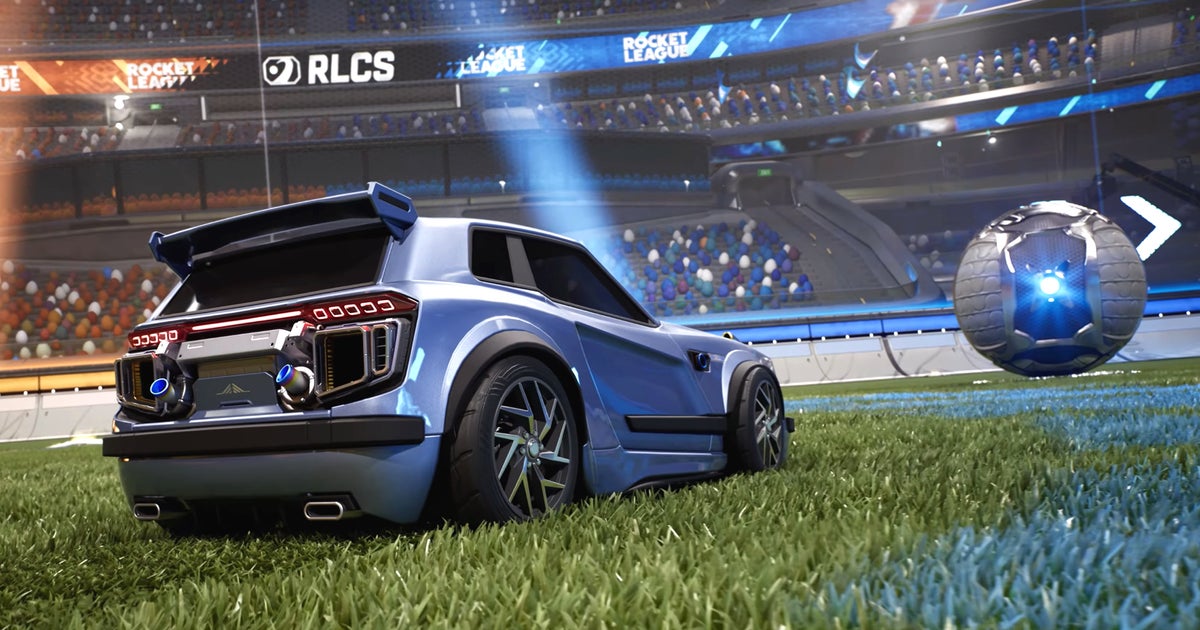
The pre-existing featured graphic is a Rocket League-specific image hosted by an independent gaming publication. It remains unchanged during this article rewrite; its editorial reuse rights have not been certified, and it must not be assumed free for social reposting.
Source date: May 27, 2026