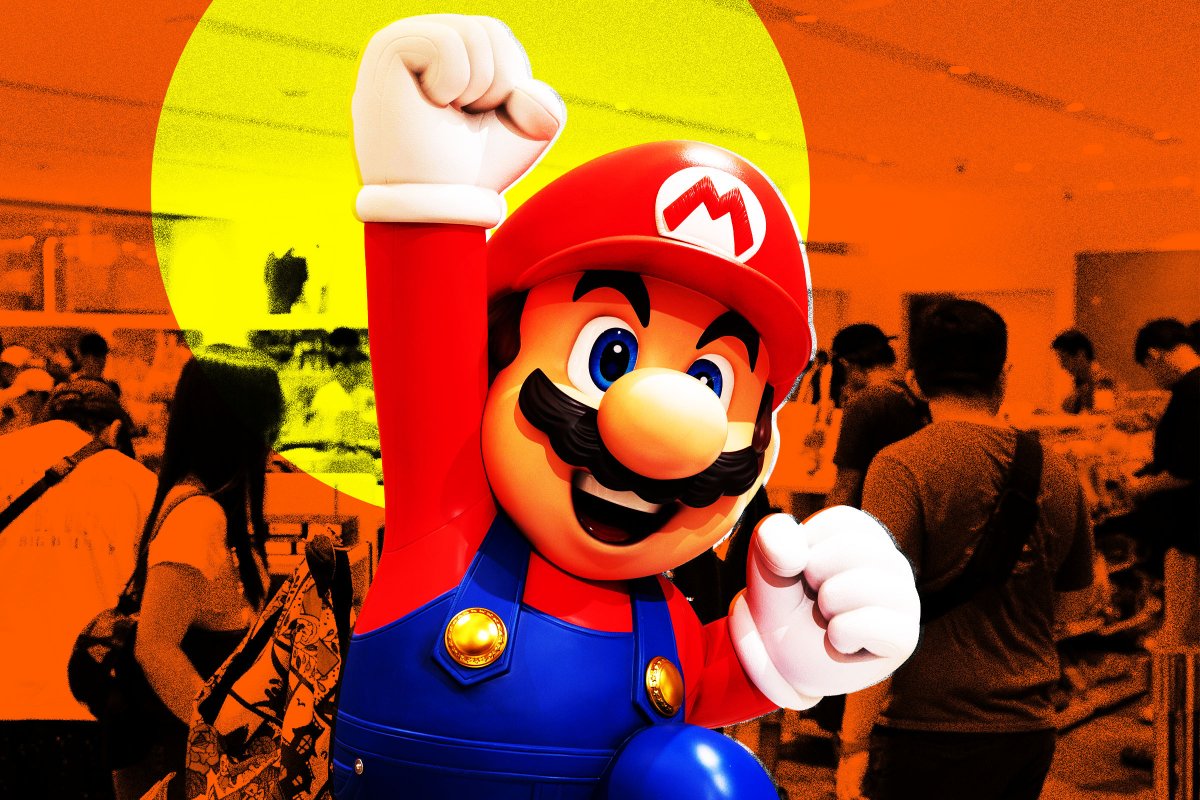
Market archive — updated November 12, 2026. Nintendo shares climbed as much as 6.8% in Tokyo on May 19, 2026, extending a three-session winning streak, while Bandai Namco and Konami each rose more than 9% that day. Bloomberg's contemporaneous report carried by The Japan Times linked the rebound partly to investors looking beyond expensive AI-related equities. This was a short-term market move, not proof that investors had abandoned artificial intelligence or that game publishers' future profits were guaranteed.
How much did Nintendo shares rise?
The reported figure is up to 6.8% during Tokyo trading on Tuesday, May 19, 2026. The company's stock had advanced for three consecutive sessions, its longest stretch of gains since mid-March, according to the Bloomberg account.
A day's intraday high should not be confused with a closing price change. Likewise, a three-session winning streak does not mean the stock rose 6.8% on each of three days. The old GameLogNews story blurred those measures and treated the number as evidence of a permanently healthier sector.
The surrounding rally included Konami Group and Bandai Namco Holdings, both reported to be up more than 9% that day. Those observations establish that multiple game-related Japanese stocks participated in the rebound.
They do not prove that every Japanese studio or global videogame publisher gained value, or that shareholders expect the same returns in the months following May.
Why was AI investor sentiment part of the story?
Bloomberg's account described investors seeking opportunities away from some highly valued AI-linked technology companies. Concerns about whether optimistic AI expectations were already reflected in stock prices helped frame the market's reaction.
That is an interpretation of market sentiment, not evidence that AI development spending had stopped. The fact that one group of shares rises while another group faces valuation questions does not itself establish a measured dollar-for-dollar sector rotation.
Stock prices also respond to company-specific earnings forecasts, currency movements, interest rates, liquidity and short-term trading. A causal claim about why everyone bought a stock would require more evidence than a few price movements and selected investor interviews.
Some analysts saw Japan's ownership of valuable entertainment intellectual property as a reason for interest in publishers. This is a plausible investing thesis, but an IP portfolio is not a guarantee of future consumer spending.
Was the rebound connected to Nintendo Switch 2?
Nintendo was already selling Nintendo Switch 2, which had launched June 5, 2025. The original GameLogNews article wrongly discussed whether the console would eventually launch or what its introductory price might be.
The manufacturer's April 2, 2025 official release announcement establishes the launch date and the original Japanese recommended prices: ¥49,980 for the Japan-only language version and ¥53,980 for the Mario Kart World bundle. A separate multilingual Japan-store edition was described at a different price.
Those are historical Japanese launch prices, not universal 2026 retail prices. Tax treatment, regional editions and currency conversion mean they should not be used as a one-to-one price comparison with every country's offer.
In May 2026, the more relevant business questions concerned the installed hardware base, game demand, component availability and future margins—not whether the announced console existed.
What were the pressure points for Nintendo?
The May 19 market report cited a memory-chip supply crunch and concerns over its effect on hardware costs and sales as background to the prior share-price pressure.
Hardware makers use memory, displays, processors and other parts whose costs fluctuate over time. A higher component price can reduce a manufacturer's margin if retail prices do not change, while a price increase can affect consumer demand.
That relationship is a risk scenario, not proof that the Switch 2 was about to experience a certain price hike. Nintendo's actual retail decisions must be supported by its announcements, rather than inferred from an equity rally.
The stock-market reaction also does not verify the technical condition or quality of any particular console, game update or subscription offering.
Did Nvidia's earnings drive the event?
The original draft suggested that a later quarterly Nvidia earnings announcement had already caused the May 19 move. Without a matching dated financial release and direct supporting evidence, that sequence is not justified.
A market feature should be anchored to when prices moved and when information became public. It should not import earnings published after an event as its established cause.
The Bloomberg article published May 19 is the strongest contemporary evidence of the reported gaming-stock rally and how some participants interpreted it.
Nvidia and other AI-oriented technology businesses have their own earnings and market developments. Those should be evaluated with their respective dated reports, not used as a generic explanation for any Japanese share movement.
Does a gaming-stock rally mean videogame sales are rising?
Not necessarily. Stock prices reflect forecasts, positioning and risk appetite, while actual business performance appears in financial statements and operational data.
A share can rise even when recent sales are weak if investors expect a recovery. Conversely, a company with strong revenue may see its stock fall if expectations were even higher.
To assess Nintendo's commercial position, inspect consolidated revenue, operating profit, Switch 2 hardware units and first-party software units in Nintendo's investor-relations disclosures. Compare those figures over consistent periods.
A report about a single trading day cannot replace that fundamental information. The previous article's claim that the rally guaranteed a more stable environment for game developers was overextended.
What can gamers learn from the May 2026 market move?
The case demonstrates how investors can reconsider the relative value of entertainment IP, hardware cycles and AI-intensive sectors. It does not mean consumers should change consoles or that a game publisher's next release is certain to succeed.
For players, the more useful information remains software support, reliable hardware, library value and actual prices. A share-price rebound can be interesting industry context, but it is not a review of a console or game.
For developers and studios, capital-market conditions may affect funding availability. Yet a short-term rebound for large listed Japanese companies does not immediately determine budgets for every independent studio.
Quick answers
How much did Nintendo rise on May 19? Bloomberg reported an intraday climb of as much as 6.8%.
Did other gaming stocks rise? Konami and Bandai Namco each gained more than 9% in the reported session.
Was Switch 2 still unreleased? No. It had launched June 5, 2025.
Does this prove that investors permanently abandoned AI? No. It documents a short-term market rebound and contemporaneous concerns over AI valuations.
Does higher Nintendo share price guarantee cheaper games? No direct relationship is established.
Bottom line: The May 19, 2026 rebound was a notable day for Japanese gaming shares amid discussion of AI-sector valuations. It should be treated as dated financial news, not a prediction of a permanent industry-wide shift.
Sources: Bloomberg's May 19 reporting, via The Japan Times; Nintendo official June 2025 Switch 2 launch and pricing; Nintendo investor relations.
Source date: May 24, 2026