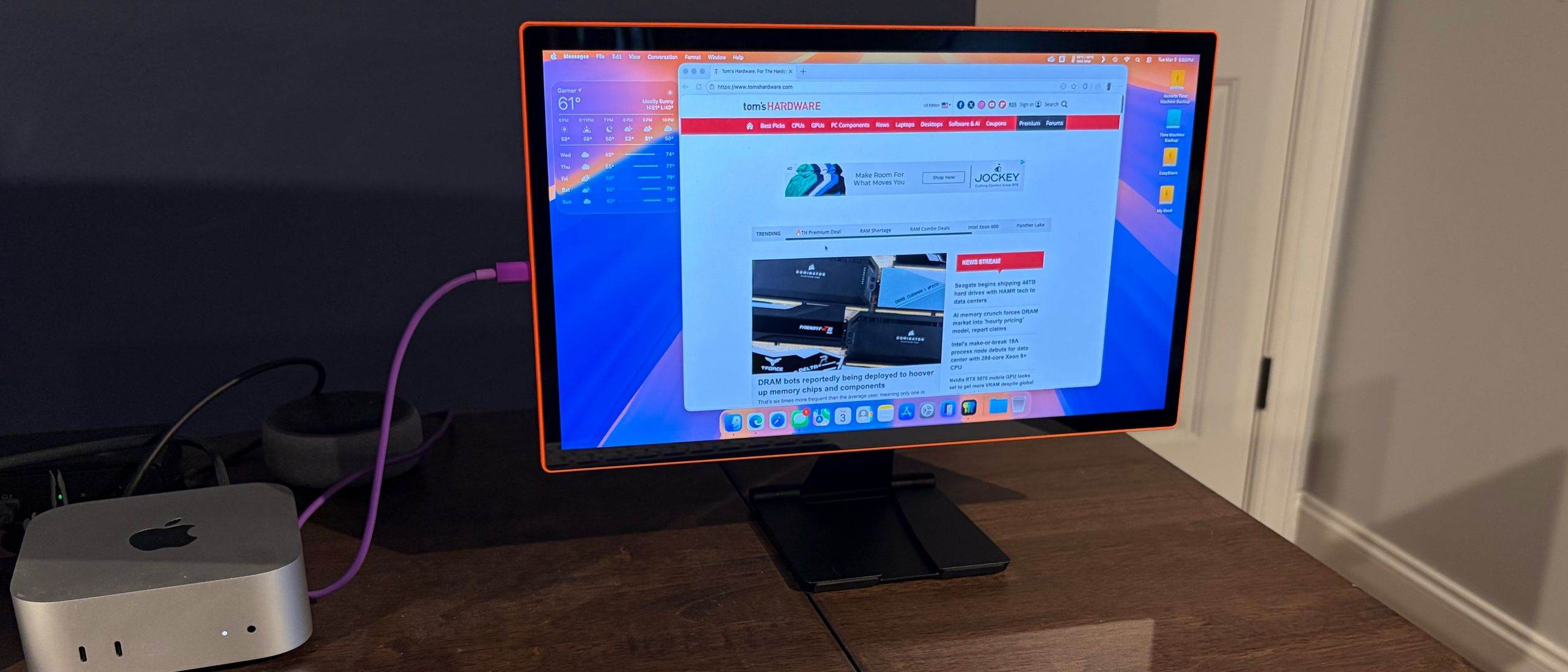
Editorial update — November 11, 2026. The Espresso Lite 15 is a 15.6-inch, 1920 × 1080 IPS portable monitor running at 60 Hz. Its defining features are colorful plastic housings, two USB-C connections, and a magnetic adjustable stand. GameLogNews has not tested this monitor in-house: the measured figures below come from Tom's Hardware's April 13, 2026 review and should not be confused with the manufacturer's claimed specifications.
Espresso Lite 15: the essential specifications
| Feature | Verified detail |
|---|---|
| Screen | 15.6-inch IPS LCD, 16:9 |
| Native resolution | 1920 × 1080 |
| Refresh rate | 60 Hz |
| Advertised brightness | 400 nits |
| Advertised contrast | 1,000:1 |
| Connections | Two USB-C ports with video and power-pass-through support |
| Speakers | None |
| Chassis | Plastic, available in multiple colors |
| Stand | Magnetic Stand+ included |
| Claimed warranty | Two years under applicable terms |
| US listing price checked | $249, subject to change |
The principal specifications come from Espresso's official Lite 15 product page, while screen type, connection details, weight and the absence of speakers were also documented in Tom's Hardware's independent review. Product pages and retailer listings change, so $249 is a snapshot rather than an offer guaranteed to every reader.
The screen is a portable Full HD second display, not a 4K panel or a high-refresh gaming monitor. A 60 Hz refresh rate is adequate for documents, streaming video and many console menus, but players seeking 120 Hz or higher motion should consider other models.
How bright was it in an actual review?
Espresso advertises a maximum brightness of 400 nits, but that figure is not the same thing as a reviewer-measured brightness under default settings. In its instrumented testing, Tom's Hardware reported 237 nits in the default picture profile and approximately 291.4 nits using the Create profile.
This distinction is important when comparing screens for a bright café, hotel window or daytime office. A product can quote a peak or nominal specification that differs materially from its out-of-box settings. A prospective purchaser should consult measured results and their likely room lighting instead of assuming that every mode delivers 400 nits.
Tom's Hardware also measured 85.4% DCI-P3 coverage and approximately 120.5% sRGB coverage in its test setup. These are the reviewer's measurements, not results generated by GameLogNews. Wide coverage alone does not demonstrate that every color is precisely calibrated; users doing critical photo or design work should still examine calibration accuracy.
What is genuinely different about the design?
Rather than using the gray aluminum aesthetic common to premium portable monitors, the Lite 15 offers white, black, orange, purple and mint options through a plastic chassis. The material makes the product visually distinctive, but it does not by itself prove better longevity or protection against drops.
The included magnetic Stand+ is a practical selling point: it supports height and tilt adjustment and can be oriented for portrait or landscape workflows. According to the independent review, the display weighs 1.55 pounds and the stand itself uses a weighted base.
Espresso supplies a USB-C cable and cleaning cloth, but not the protective travel case some competing portable monitors include. A frequent traveler should account for the cost and fit of a case when evaluating the overall package, not just the base display price.
What are the biggest compromises?
There are three particularly relevant trade-offs. First, reflections: Tom's Hardware found that the glossy surface made colors appear lively but reflected its surroundings significantly in dark interfaces. A dim game or video can expose reflections more obviously than a white spreadsheet.
Second, there are no built-in speakers. Audio should come from the attached computer, headphones, console or separate speakers. A player should not expect the monitor itself to reproduce game sound.
Third, USB-C compatibility must be checked. The two ports are intended for video and power workflows; Espresso notes that some devices may need extra power or an adapter cable. A USB-C-shaped connector is not sufficient proof that a laptop supports DisplayPort Alternate Mode. Check the host device and console requirements before ordering.
The monitor's 60 Hz limit and modest Full HD pixel density also make it a secondary screen rather than a substitute for a demanding esports or detailed desktop-production display.
Should gamers choose it?
For players who want a compact companion display while traveling, lightweight construction, simple one-cable setup and an adjustable stand can be more valuable than extreme refresh rates. It can suit slower-paced games, Discord, walkthroughs or secondary PC applications, provided the connected device supports the required display output.
However, 60 Hz is a hard ceiling regardless of whether a powerful graphics card can render hundreds of frames per second. People using 120 or 144 Hz handhelds or competitive setups will not obtain those refresh rates from this monitor.
A conventional inexpensive 1080p portable screen may offer similar basic image specifications for less money. In April 2026, Tom's Hardware praised the colors and relative portability, but also considered the price fairly high for the mainstream category. Buyers need to decide whether the magnetic stand, design and accessory ecosystem justify that premium.
Quick answers
Is the Lite 15 an OLED? No, it is an IPS LCD.
Can it display 144 Hz games? It is specified for up to 60 Hz.
Does it have speakers? No.
Is it as bright as 400 nits in the default mode? Tom's Hardware measured 237 nits in its reviewed default profile; 400 nits is Espresso's manufacturer specification.
Does it include an adjustable stand? Yes, Espresso lists the magnetic Stand+ in the box.
Bottom line: Espresso Lite 15 prioritizes a colorful portable design and adjustable stand over high-refresh performance or ultra-low pricing. Its strengths and limits are clearest when official specifications are compared against independent measurements, rather than treated as identical.
Sources: Espresso's official Lite 15 listing and Tom's Hardware, Brandon Hill, April 13, 2026.
Source date: April 13, 2026