Editorial correction — November 11, 2026: Our April 12 preview of Anno 117: Pax Romana – Prophecies of Ash described a future expansion using early details. Ubisoft has since released the DLC and published a complete description. This updated guide distinguishes the original preview from the confirmed April 30, 2026 release, corrects the game's full name and explains its five-stage volcanic cycle. The original April 12 publication date and URL are preserved.
When did Prophecies of Ash release?
Prophecies of Ash, the first major gameplay DLC in Anno 117: Pax Romana's Year 1 content, released on April 30, 2026 for PlayStation 5, Xbox Series X|S and PC. Ubisoft's official release-day article confirms the final date and the new mechanics.
Early marketing had originally mentioned April 23, which is why some historical previews and older listings may differ. The release was subsequently moved to April 30, as also acknowledged in Ubisoft's developer tips published on Xbox Wire. Players looking for an accurate release history should use the later, confirmed date.
The DLC is not a separate standalone city-builder. It expands the existing game's Latium province with more land, specialized production and environmental risks.
How many islands does the DLC add?
Ubisoft confirms six additional islands in northern Latium: three medium-sized, two small, and one very large continental island named Cinis. This is an expansion of the playable province rather than a completely different campaign.
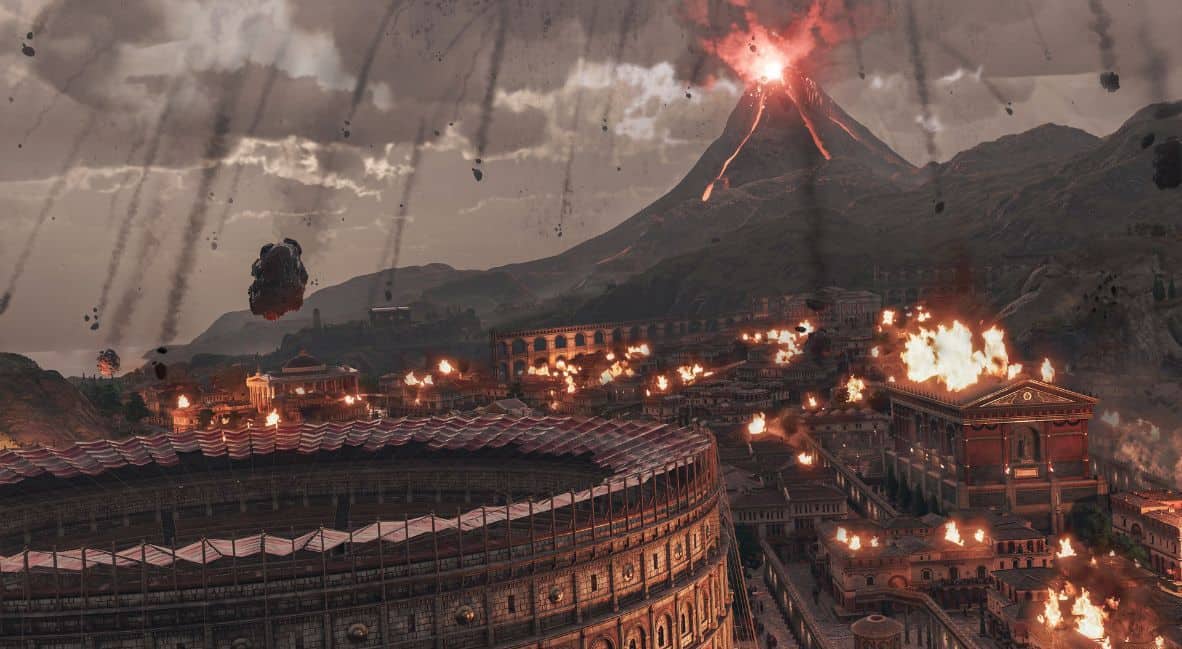
Cinis is the main attraction. Ubisoft estimates its buildable area at about twice that of the base game's largest island. That unusually large footprint creates space for ambitious Roman settlements, but the area is not automatically easier to develop. Players must contend with a nearby active volcano, plan around mountainous terrain, and develop resilient supply routes.
The island offers plentiful mountain and river building opportunities, plus beaches suited to harbors and fisheries. According to the official guide, players can sail to Cinis and establish a Trading Post, or select the island as their starting region in a new game. That flexibility lets established saves expand outward while giving new players a different opening geography.
What does the volcano actually do?
Cinis's volcano follows five distinct phases, not the vague three-stage model that some early descriptions suggested. Ubisoft's release-day breakdown identifies each phase and its practical consequences.
| Phase | What players should expect |
|---|---|
| Calm | Normal activity without active volcanic disruption |
| Prelude | Tremors with potential damage to nearby buildings |
| Eruption | Falling rocks can damage structures, and mountain production pauses |
| Volcanic Winter | Farm and fishery output falls; some welfare and safety values decline; obsidian deposits refill |
| Bloom | Rain clears the disruption and boosts farm productivity according to improved soil quality |
This cycle adds a meaningful strategic decision. An eruption can cause short-term damage to infrastructure while also creating the conditions for future growth. The challenge is to build robust supply chains, keep emergency materials available and take advantage of the productive phase that follows.
Ubisoft says repeated eruptions raise Cinis's soil level. The initial cap is reached after three eruptions; research can extend the limit to five. That creates a progression incentive to tolerate carefully managed disruption instead of treating the volcano as a random visual effect.
Can you disable the eruptions?
Yes. The developer allows players to turn off the volcano's active cycle and change its difficulty. Disabling eruptions removes damaging phases, but it comes at a cost: soil levels and the related farming bonus can decline over time.
The game also lets players adjust how much damage tremors cause and how much obsidian is generated during each cycle. These settings make the DLC more approachable for players interested primarily in designing large Roman cities rather than managing disaster recovery.
However, switching off the cycle is not necessarily a free economic optimization. Ubisoft's developer strategy guide notes that avoiding eruptions can restrict the replenishment of obsidian, which matters to the new production chains.
How do you obtain obsidian?
Obsidian is the major new resource. It is created by the volcanic environment and can be obtained from mines or quarries after eruptions and by collecting fallen volcanic rocks when conditions are safe. Its supply is therefore tied to the decision to accept—or minimize—the volcano's activity.
The resource supports the production of statuettes and Latrunculi, and it has trading value with the new island merchant. Players who want to develop the complete production economy need to plan for the timing of deposits rather than assuming every island will generate an endless passive supply.
Cinis also introduces Caecelia, an oracle and trader. Her quests familiarize the player with volcanic mechanics, and she offers specialist characters in exchange for particular resources or finished goods. Trading opportunities give the DLC another reason to maintain efficient production routes.
An important distinction is that a valuable material does not guarantee unlimited income. The player still needs collection logistics, worker capacity, storage and reliable supply to make the most of the opportunity.
What is the new deity Vulcun for?
The DLC adds Vulcun, a deity unlocked through research, whose benefits support the volcanic island's industrial systems. Ubisoft lists bonuses for buildings using mountain slots, extra workforce, improved fire safety and effects benefiting smelters.
The deity also permits coal mines. Unlike some other resource buildings, these can be built in mountain slots without depending on a particular island fertility requirement. This gives players a new way to structure production and logistics.
The practical value depends on the rest of your settlement. A town focused on mountain extraction, heavy processing or volcanic resource output may benefit from the deity's improvements more directly than a settlement built primarily for tourism-like aesthetics or low-intensity farming.
The exact numbers of bonuses and the best combination of specialists can vary with the player's choices and later balance patches. This article summarizes the publisher's original release mechanics; it is not a claim to have independently optimized every production chain.
What should players prioritize on Cinis?
An effective opening starts with an accessible harbor and secure supply route. After founding a Trading Post, protect the buildings whose interruption would destabilize the entire economy: emergency supplies, storage, transportation connections and production facilities that are hard to replace quickly.
Next, pay attention to the volcano's active phase. During a Prelude, it may be prudent to avoid committing to expensive upgrades in exposed locations. During Volcanic Winter, farms and fisheries produce less, so a city that relies on only one food chain could face shortages.
When the cycle reaches Bloom, increased agricultural output may offset earlier losses. Research can amplify that longer-term upside. This is strategic guidance inferred from the confirmed mechanics, not an independently tested optimal layout or guaranteed win condition.
Players who want a calmer design experience should review the difficulty settings before investing heavily. Those seeking the full production challenges should plan around obsidian replenishment rather than turning off eruptions without considering the consequences.
Frequently asked questions
What is Cinis?
Cinis is the DLC's new continental volcanic island in northern Latium, with around twice the buildable area of the largest base-game island.
When did the DLC come out?
The confirmed release date was April 30, 2026, after an earlier April 23 date had been advertised.
How many volcanic phases are there?
Five: Calm, Prelude, Eruption, Volcanic Winter and Bloom.
Can players switch off the volcano?
Yes, but doing so also affects soil-productivity bonuses and opportunities to replenish obsidian.
What is obsidian used for?
New production chains involving statuettes and Latrunculi, as well as trading with the Cinis merchant.
Can you play it on consoles?
Ubisoft lists PlayStation 5 and Xbox Series X|S alongside PC versions of Anno 117: Pax Romana.
Sources and image note
First-party references: Ubisoft's April 30 launch guide and Ubisoft developer tips on Xbox Wire, which acknowledge the adjusted release date. No independent GameLogNews hands-on test is implied.
The previously published Anno 117 featured screenshot is unchanged during this factual rewrite. Its original third-party hosting and reuse permission should be reviewed separately before any media republication or social posting.
Source date: April 12, 2026